

Written By: Nick Todorovic, Partner, and Sara Ferro (Summer Student)
6 Minute Read
Introduction
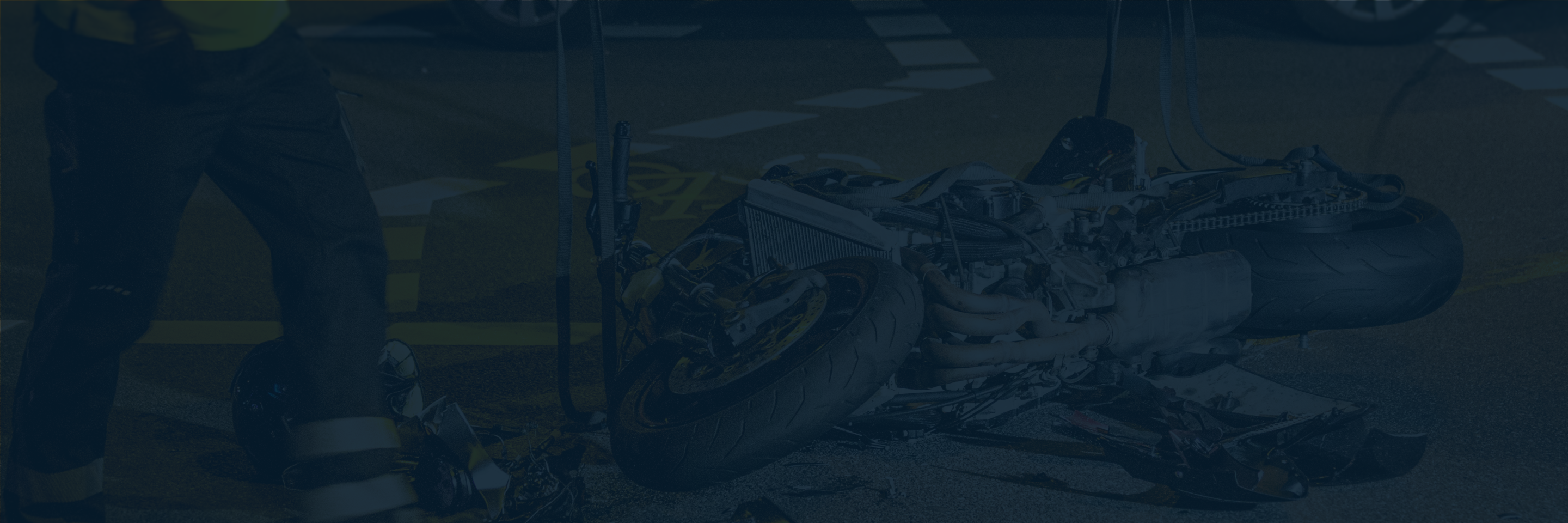
After a motorcycle collision, drivers almost always say “I didn’t see the motorcycle.” A motorcycle collision claim can be more complex than it seems and carries serious legal consequences. Given its Motorcycle Awareness Month, this blog will focus on the leading factors that cause motorcycle accidents and why the legal claims that follow are rarely straightforward.
Motorcycle Vulnerability on the Road
Motorcyclists are often the most vulnerable vehicles on the road. This is because motorcycles are smaller in size, provide minimal protection, and are in general difficult to notice. They do not have the proper safety mechanisms that are built into cars, such as seatbelts or airbags. As a result, motorcycle collisions increase vulnerability and present a higher risk of catastrophic injury.
The Most Common Scenarios
Examples of the most common scenarios include:
- Left-turn collisions
- Lane changes and merging
- Blind spot incidents
- Intersections and sudden turns
These scenarios can lead to motorcycle collisions because of visibility and awareness issues. Imagine you’re driving on a busy highway when a motorcycle merges into your lane, directly in your blind spot. Before you can react, it’s too late, and you are involved in a serious collision. How could this tragedy have been prevented? Driver awareness.
Driver Awareness: Blind Spots and Attention
Sometimes a driver may think they are aware of their surroundings, but studies have shown that humans can fail to perceive the world around them due to inattentional blindless, also known as “looked but failed to see” (LBFTS) errors. In the article, Normal blindness: when we Look But Fail To See , LBFTS is used to explain the situation where a driver says they looked in the direction of the motorcyclist, but they never actually saw the motorcyclist.
It is the unfortunate truth that motorcycles are more difficult to see on the road. The Official Ministry of Transportation (MTO) Driver’s Handbook emphasizes the importance of defensive driving, outlining three ideas: visibility, space, and communication.
To increase visibility, drivers should create more space between their vehicle and surrounding traffic. This allows the driver more time to react when faced with a situation that could result in an accident. It is also important to communicate with those you share the road with. Communication involves using your turn signals proactively and making eye contact with other drivers and motorcyclists before you merge or make a turn.
How Fault is Assessed
After a motorcycle accident, one of the first things people research is “motorcycle accident fault Ontario.” When insurers and investigators conduct a fault assessment, they consider a variety of components, such as obtaining witness statements, determining road conditions and vehicle positioning, as well as considering accident reconstruction evidence. Despite this process, fault is not always straightforward, and motorcycle collision claims can be quite complex.
The Complexity of Motorcycle Collision Claims
Key factors that can affect the outcome of a motorcycle collision claim include speed, visibility, lane positioning, or rider behaviour. Assessing these factors becomes more complicated when there is minimal evidence to support the claim, such as witness testimony or surveillance footage.
Sometimes bias and assumptions about motorcyclists can also affect the outcome of a claim. For example, an insurance company might adjust a motorcyclists’ claim because they automatically assume that the motorcyclist was the negligent party. This often comes down to stereotyping, as motorcyclists are often presumed to be dangerous or reckless. This bias can follow them into the courtroom, where a jury might be quick to decide that the motorcyclist was at fault.
The severity of injuries can impact the complexity of a motorcycle collision claim. Serious injuries like traumatic brain injury (TBI) or spinal cord injury (SCI) require extensive medical examinations and expert testimony.
Steps to Take After a Motorcycle Accident
When you are involved in an accident, it can be extremely overwhelming, and your health comes first. However, collecting evidence as early as possible is critical. This is because evidence can disappear quickly and make or break your claim.
Below are the practical steps that should be taken if you are involved in a motorcycle accident:
- Seek immediate medical attention
- Document the scene
- Gather witness information
- Preserve helmet and gear evidence
- Report the collision to the authorities
How a Personal Injury Lawyer Can Help
You don’t have to take these steps alone. A personal injury lawyer can guide you through every stage of your claim, protect your rights, and thoroughly investigate the collision to build the strongest case possible. Whether through challenging assumptions of fault or working with reconstruction experts, personal injury lawyers understand what’s at stake and will fight to protect your rights.
Conclusion
“I didn’t see the motorcycle” does not automatically excuse driver negligence. If you or someone you know has been involved in a motorcycle collision, contact our team today to fully understand your rights and the options available to you.
To learn more about motorcycle safety, check out our blog on motorcycle safety tips for new riders: Motorcycle Safety Series: Tips for New Riders